Loudoun County District Court serves as the primary court where many everyday legal matters are heard in Loudoun County, Virginia. It handles traffic violations, misdemeanor criminal cases, preliminary felony hearings, and civil disputes within set limits. This court is often the first place residents encounter the local justice system. It operates under Virginia law and follows statewide court procedures. Through regular hearings, it helps keep legal issues moving in an orderly way.
Loudoun County District Court plays a direct role in the daily lives of residents, drivers, defendants, and people involved in civil cases. Drivers rely on it for fair decisions in traffic and license matters. Defendants face important early rulings that shape how their cases move forward. Civil litigants use the court to resolve disputes without long delays. As part of the broader Loudoun County court system, it connects local cases with Virginia’s larger judicial structure.
How to Search Loudoun County District Court
District court cases in Loudoun County Court can be checked online through the official Virginia court system or reviewed in person at the courthouse. Most public court records appear through name, case number, or case type searches.District court cases involve traffic matters, misdemeanors, and lower-value civil disputes. The information below explains where records come from, how the official search tool works, and the exact steps users follow to find case details without confusion.
Searching Loudoun County District Court Cases
Official Tool Link:
https://eapps.courts.state.va.us/gdcourts/
This tool allows searching district court cases by name, case number, hearing date, or service/process information.
Open the Online Case Information System
- Go to the official site using the link above.
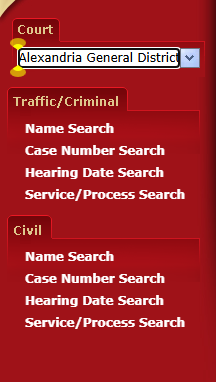
- You will see the court drop-down menu on the left side.
Select the Court
- Click the drop-down menu labeled “Court.”
- Choose Loudoun County General District Court from the list.
(Make sure you select the correct county to get accurate results.)
Choose Your Case Category
- On the left, cases are divided into Traffic/Criminal and Civil.
- For traffic violations or misdemeanors, use Traffic/Criminal.
- For small claims or civil disputes, use Civil.
Choose a Search Method
You can search using one of the following options:
Name Search
- Enter the plaintiff or defendant’s full name.
- Works best for recent filings or if the case number is unknown.
Case Number Search
- Enter the exact case number if you have it.
- This gives the most precise result.
Hearing Date Search
- Enter a specific date or date range.
- Helps locate cases scheduled on a particular day.
Service/Process Search
- Search for cases by summons or subpoena information.
- Useful if looking for service of process details.
Enter Details and Submit
- Fill in the required fields for your chosen search method.
- Double-check spelling and date formats.
- Click Search to view matching cases.
Review Search Results
- The results page shows:
- Case Number
- Party Names
- Case Type
- Filing or Hearing Dates
- Current Status
How the Loudoun County General District Court Works
The Loudoun County General District Court is a local court that handles minor legal matters and initial hearings for more serious cases. It serves as the first point of contact for residents dealing with traffic violations, misdemeanors, and small civil disputes.
The General District Court in Loudoun County, Virginia, focuses on cases that involve lower-level offenses and claims. Unlike the Circuit Court, which handles serious criminal charges and larger civil lawsuits, the general district court deals primarily with traffic tickets, landlord-tenant disputes, small claims, and misdemeanor cases. Its procedures are generally faster and less formal, providing a streamlined path for resolving everyday legal issues.
Key Functions of the General District Court
Residents of Loudoun County can expect the court to handle a variety of matters, including:
- Traffic infractions and violations – speeding, reckless driving, and other minor offenses.
- Misdemeanor criminal cases – petty theft, simple assault, and similar charges.
- Civil cases with limited financial claims – typically disputes involving amounts under $25,000.
- Preliminary hearings – initial proceedings for felony cases that may move to Circuit Court.
Differences Between General District and Circuit Court
The Loudoun County General District Court is often confused with the Circuit Court, but there are distinct differences:
| Feature | General District Court | Circuit Court |
|---|---|---|
| Case Type | Minor criminal cases, traffic violations, small civil claims | Felony criminal cases, larger civil claims, family law, probate |
| Financial Limit | Civil disputes usually under $25,000 | Civil disputes over $25,000 |
| Jury Trials | Not available | Available for most cases |
| Appeals | Appeals go to Circuit Court | Appeals go to Virginia Court of Appeals or Supreme Court |
Jurisdiction of Loudoun County District Court
The Loudoun County District Court has authority over specific types of civil and criminal cases within the county. It handles minor criminal offenses, traffic matters, and civil disputes that fall within its monetary limits.
The district court jurisdiction in Loudoun County is defined by state law, giving the court authority to hear cases that do not require a higher court’s involvement. This includes traffic violations, misdemeanors, and small claims cases. Residents often ask, what cases does the district court handle? The answer lies in its clearly defined civil and criminal powers.
Criminal Cases in District Court
District courts have the authority to handle misdemeanor criminal cases, which generally involve less serious offenses than felonies. These can include:
- Traffic violations, such as speeding or reckless driving
- Minor theft or property crimes
- Simple assault and related misdemeanors
- Cases involving local ordinance violations
Civil Authority and Monetary Limits
In civil matters, Loudoun County District Court can resolve disputes involving money or property, but only up to a certain financial threshold. Typically, this includes:
- Small claims cases up to $5,000
- Landlord-tenant disputes
- Contract disputes within the court’s monetary limits
Traffic and Specialized Cases
The court also handles:
- Traffic court matters, including DUI hearings and fines
- Certain misdemeanor cases that may arise from accidents or local violations
Key Takeaways:
| Case Type | District Court Authority | Notes |
|---|---|---|
| Misdemeanors | Yes | Preliminary hearings for serious offenses |
| Felonies | No | Referred to Circuit Court |
| Civil claims ≤ $25,000 | Yes | Includes small claims and landlord disputes |
| Civil claims > $25,000 | No | Must be filed in Circuit Court |
| Traffic violations | Yes | Includes DUI and moving violations |
Types of District Court Cases in Loudoun County
District courts in Loudoun County handle a variety of legal matters ranging from traffic violations to small civil disputes. These courts provide a local forum where residents can resolve both criminal and civil issues efficiently.
Loudoun County district courts are designed to process cases quickly while maintaining fairness and accessibility. District court cases include traffic offenses, misdemeanor crimes, small claims, and certain civil matters. Court proceedings are usually streamlined, with procedures set to help individuals resolve disputes without lengthy delays. Understanding the different court case types can help residents prepare for what to expect and take appropriate steps.
Traffic Court in Loudoun County
Traffic court addresses violations of driving laws, such as speeding or reckless driving. It provides a legal venue where individuals can contest tickets or pay fines.
In Loudoun County, traffic court handles offenses including:
- Speeding tickets
- Reckless or careless driving
- Driving without a license or insurance
- Red-light and stop sign violations
The Traffic Court Process
When a ticket is issued, the individual must respond by either paying the fine or requesting a hearing. During the hearing, a judge reviews evidence and hears testimony from both sides. Outcomes can include fines, points on a driving record, or traffic school requirements.
What to expect in traffic court:
- Notification: Receive a court date or instructions on how to respond.
- Hearing: Present your case or enter a plea.
- Judgment: Pay fines or follow other court orders.
Misdemeanor Cases in District Court
Misdemeanor cases in Loudoun County cover minor criminal offenses that are less severe than felonies. These cases are prosecuted in district court and often involve a more straightforward process.
Common Misdemeanor Charges
Typical criminal misdemeanors include:
- Petty theft or shoplifting
- Simple assault
- Disorderly conduct
- DUI (first offense in some cases)
Court Process and Possible Outcomes
The court process begins with an arraignment, where charges are formally presented. Defendants may enter a plea of guilty, not guilty, or no contest. The judge then sets a trial date if needed. Possible outcomes include probation, fines, community service, or short-term jail sentences. District court criminal cases are structured to resolve matters efficiently while ensuring defendants have access to legal representation and a fair hearing.
Small Claims Court in Loudoun County
Small claims court provides a venue for resolving minor civil disputes without complex procedures. Cases typically involve limited monetary claims and are designed for individuals or small businesses.
Eligible small claims cases generally include:
- Money owed for goods or services
- Property damage claims
- Breach of contract within monetary limits
Filing Process and Users
The filing process is straightforward. Plaintiffs submit a claim, notify the defendant, and attend a scheduled hearing. Most parties represent themselves, making it accessible for residents who do not require full legal counsel.
Who uses small claims court:
- Tenants seeking security deposit returns
- Individuals owed money for services
- Small business owners resolving minor contractual disputes
Civil Cases Handled by District Court
District court cases also include non-criminal civil matters that involve personal or business disputes. These courts handle cases that are often less complex than those in circuit courts.
Common civil litigation cases include:
- Landlord-tenant disputes, such as eviction or unpaid rent
- Contract disputes between individuals or small businesses
- Property damage claims under a certain monetary limit
Court Process for Civil Cases
Civil cases in district court focus on resolving conflicts efficiently while providing parties with a clear and structured process. The court may schedule hearings, require mediation, or issue judgments that help enforce agreements or compensation.
Court Procedures and What to Expect
Attending the Loudoun County District Court can feel unfamiliar for first-time visitors, but the process follows clear, structured steps. Knowing what happens before, during, and after a hearing helps residents prepare and approach their case with confidence.
Before the Hearing
The court process begins once a case is filed. Plaintiffs or defendants receive official notifications that include the date, time, and location of the hearing. Parties are encouraged to review all documents, evidence, and witness information ahead of time. Legal counsel can be sought, although for minor cases, individuals may represent themselves.
Key pre-hearing steps include:
- Reviewing the court process for your case type
- Organizing documents and evidence
- Understanding applicable deadlines for filings or responses
During the Hearing
District court hearings are typically held in a formal courtroom setting. The judge presides over the proceedings, ensuring both sides have an opportunity to present their case. Parties may present evidence, call witnesses, or provide testimony.
What to expect during the hearing:
- Opening Statements: Each side briefly summarizes their position.
- Presentation of Evidence: Documents, photographs, or witness testimony are introduced.
- Cross-Examination: Questions may be asked to clarify statements or challenge evidence.
- Judge’s Questions: The judge may ask additional questions for clarity.
After the Hearing
Once the hearing concludes, the judge may issue an immediate decision or schedule a later date for the ruling. Outcomes can include fines, payment orders, probation, or dismissal, depending on the type of case. Parties may also receive instructions for appeals or compliance with court orders.
Following the hearing, it is important to:
- Ensure all court orders are clearly understood
- Submit any additional documentation if requested
- Keep track of deadlines for payments or compliance
Role of Judges and Court Staff
The Loudoun County District Court relies on judges and court staff to manage cases fairly and efficiently for the public. Knowing who handles court administration and how they support the legal process can help users feel more confident and informed.
District Court Judges
District court judges preside over hearings and make decisions based on the law and evidence presented. In Loudoun County’s General District Court, judges include:
- Hon. Lorrie Ann Sinclair Taylor, Presiding Judge
- Hon. William R. Fitzpatrick, Judge
- Hon. Jessica H. Foster, Judge
- Hon. Eric M. Shamis, Judge
These judges conduct district court hearings, oversee both criminal and civil cases, and issue rulings on matters such as fines, probation, or case dismissal. Their role is to ensure each party has a fair opportunity to present their point of view and that legal standards guide all outcomes.
Clerk of Court and Court Staff
The clerk of court serves as the administrative backbone of Loudoun County District Court. The clerk’s office manages all filings, schedules hearings, and maintains official court process records. In Loudoun County’s General District Court, the clerk is:
- Carla Marie Clark, Clerk of Court
Clerks help parties submit legal documents, provide procedural information, and ensure that records are accurate and accessible. Other court staff assist at the counter, answer procedural questions, and support courtroom operations so judges can focus on hearings.
How Judges and Staff Work Together
Judges and court staff function as a team to support transparent legal procedures. Judges interpret and apply the law during hearings, while clerks and administrative staff handle scheduling, document management, and communication with attorneys and citizens. This division of work helps the Loudoun County District Court run smoothly, reduces confusion for first‑time visitors, and builds confidence in the judicial system.
Rights and Responsibilities of Court Users
Individuals involved in district court cases have both rights and responsibilities that help ensure the legal process runs smoothly. Knowing what is expected during a court appearance can reduce confusion and prevent missed deadlines or penalties.
Rights of Court Users
Every person appearing in Loudoun County District Court is entitled to basic legal protections. Defendant rights and general court user rights include:
- The right to be informed of charges or claims against them
- The right to legal representation or to appear without an attorney for minor matters
- The right to a fair and impartial hearing
- The right to present evidence, call witnesses, and respond to claims
Responsibilities of Court Users
Court users also have legal obligations to maintain order and comply with court procedures. Legal responsibilities and rules include:
- Arriving on time for hearings and notifying the court if unable to attend
- Following courtroom decorum, including respectful behavior and proper dress
- Submitting required documents and evidence according to deadlines
- Complying with all orders issued by the judge
Location and Contact Information
The Loudoun County District Court is located in Leesburg, Virginia, serving residents across the county for civil, criminal, traffic, and small claims matters. Accurate location details and contact information help ensure visitors can reach the courthouse easily and on time.
Court Address and Contact
Street Address: 18 East Market Street, Leesburg, VA 20176
Main Phone Number: (703) 777-0260
Office Hours: Monday – Friday, 8:30 AM – 4:30 PM
Directions and Accessibility
Visitors can reach the courthouse by car or public transportation. For drivers, the courthouse is accessible via Route 7 and Route 15, with multiple nearby parking options, including metered street parking and public parking garages. Individuals using public transit can take Loudoun County Transit buses, with stops near the courthouse entrance.
The courthouse is fully accessible for people with disabilities, including wheelchair ramps, elevators, and ADA-compliant restrooms. Visitors requiring special accommodations can contact the clerk’s office in advance to ensure a smooth visit.
Parking and Transportation
- On-Site Parking: Limited visitor spaces available at the courthouse
- Nearby Parking Garages: Short walking distance from the main entrance
- Public Transit: Multiple bus routes stop within 2–3 minutes of the courthouse
Frequently Asked Questions
Many residents have questions about attending or filing cases in the Loudoun County District Court. This FAQ section provides clear, practical guidance on common concerns, helping users understand procedures, rights, and responsibilities when dealing with district court cases.
Are District Court Records Public?
Most district court records in Loudoun County are public, including case filings, judgments, and hearing schedules. Public access promotes transparency and allows parties to track their cases. However, certain records may be restricted to protect privacy, such as juvenile cases, sealed civil or criminal matters, and some sensitive family or protective order cases. Residents can request copies from the clerk of court or search online through available court portals. Some documents may require a nominal fee, and submitting requests in advance helps ensure timely access.
Can I Represent Myself?
Individuals are allowed to represent themselves in Loudoun County District Court, particularly for traffic, small claims, or minor misdemeanor cases. Representing oneself requires filing all necessary forms and documents correctly, understanding court procedures and deadlines, and presenting evidence and witnesses effectively. For more complex matters, such as criminal misdemeanors or civil disputes with significant claims, hiring an attorney is highly recommended. Legal counsel can help avoid procedural errors, present stronger arguments, and improve the likelihood of a favorable outcome.
What Happens If I Miss Court?
Failing to appear at a scheduled hearing can result in serious consequences. A default judgment may be entered against you in civil or small claims cases, fines or additional penalties may be imposed, and warrants may be issued in criminal cases, including misdemeanor charges. If a court appearance cannot be attended, contacting the clerk’s office immediately is critical. Early communication may allow rescheduling, preventing unnecessary penalties and keeping the case on track.
How Long Do Cases Take?
The duration of district court cases varies depending on the type and complexity. Traffic and small claims cases are often resolved in a single hearing or within a few weeks. Misdemeanor cases may require multiple hearings, including arraignment, pre-trial, and trial dates. Civil cases may take longer depending on the number of parties involved, filings, and any required mediation. The clerk of court can provide updates on case progress, estimated hearing dates, and filing requirements. Staying in contact with the court helps ensure timely completion of all case steps.
How Do I Pay Fines or Fees?
Fines, court costs, and other charges associated with district court cases can typically be paid online using the court’s official payment portal, in person at the clerk’s office during business hours, or by mail with checks or money orders including your case number. Failure to pay on time may result in late fees, suspension of a driver’s license, or additional enforcement actions. Residents should always confirm payment deadlines and retain proof of payment for their records.
Can I Get a Copy of My Case Documents?
Copies of case documents are available upon request through the clerk of court. To obtain records, individuals may need to complete a request form with case details, pay a nominal fee per page or document, and provide identification for verification. Some documents may be restricted or sealed, especially in cases involving minors or sensitive personal matters. Requesting documents early ensures they are available before hearings or deadlines.