Loudoun County Circuit Court is the main trial court in Loudoun County, Virginia, handling serious legal matters within the county. The court oversees felony cases, large civil disputes, and probate issues, ensuring that laws are applied fairly. As part of the Virginia judiciary, it serves as a critical component of the Loudoun VA court system. Residents often rely on this court for cases that exceed the scope of lower courts.
The Loudoun County Circuit Court also has authority to hear appeals from the General District Court and Juvenile and Domestic Relations Court. It manages criminal cases, civil litigation, and estate matters, making it essential to the county legal system. Judges elected to this court provide rulings that impact both individuals and the broader community. The court’s role ensures justice is maintained for all serious legal matters in Loudoun County.
How to Access Loudoun County Circuit Court
Loudoun County circuit court cases and Loudoun County Court filings can be searched online or by visiting the courthouse in Leesburg. Some records are open to the public, while others are restricted due to privacy or legal requirements.
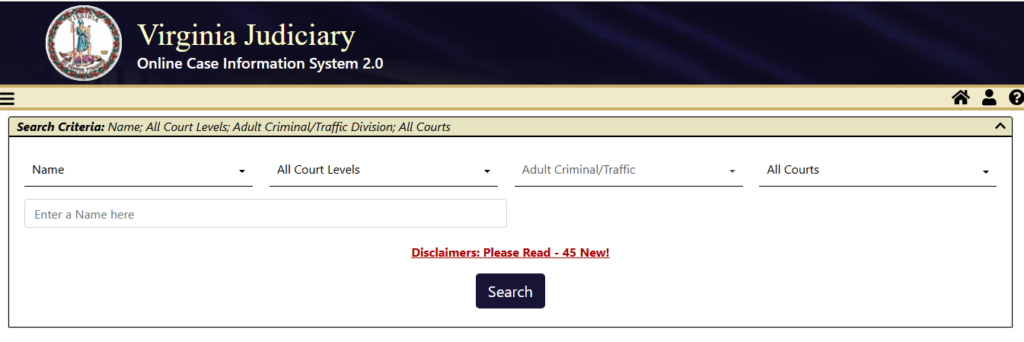
Official Circuit Court Case Search Tool
Official Virginia online case search:
Virginia Judiciary Online Case Information System – https://eapps.courts.state.va.us/ocis/landing
Open the Official Case Lookup Tool
- Visit the Virginia Judiciary Case Information page:
https://eapps.courts.state.va.us/ocis/landing - Confirm you see an official “Virginia’s Court System” header — this is the authentic court search portal. The site uses secure HTTPS and is maintained by the Supreme Court of Virginia.
Choose the Proper Search Mode
The system typically offers several search options:
Search by Party Name – enter the first and last name linked to the court case.
Search by Case Number – if you already know the Loudoun case number.
Search by Hearing Date – if you have a specific court date.
Enter Search Criteria
Best practices for accurate lookup:
Type the full last name and first name (no nicknames).
If results are broad, add a hearing date or the court division (civil vs criminal).
Avoid abbreviations unless the case number includes them (e.g., “CR” for criminal).
View Case Details
After searching:
- You may see a list of cases (with docket numbers) matching your search.
- Click the desired case number link to open detailed status information — including hearing dates, parties, charges, and current status.
- This will show court docket entries and basic case data. Actual filings (PDFs) may not be visible unless you have authorized access or visit the Clerk’s Office.
Getting Full Documents or Certified Copies
If the online case status does not include filings or motions, follow these options:
In Person at the Loudoun Courthouse
- Go to the Clerk of the Circuit Court’s office at:
18 E. Market Street, 3rd Floor, Leesburg, VA 20176 - Public kiosks inside the courthouse offer free access to some digital records.
Certified copies or printed documents can be requested at the counter. Fees generally apply (e.g., copying fees).
Public vs. Restricted Records
- Most civil and criminal court cases are public.
- Restricted or sealed records include:
- Juvenile cases
- Adoption records
- Certain personal privacy files
- Access to restricted records may require a court order or attorney access.
Types of Cases Heard in Loudoun County Circuit Court
Loudoun County Circuit Court handles a wide range of cases, including criminal, civil, probate, and appeals from lower courts. Each case type follows specific procedures and timelines that affect how matters progress through the court system.
Felony Cases
Felony cases in Loudoun County Circuit Court involve serious criminal offenses such as assault, burglary, drug trafficking, and fraud. Key aspects include:
- Initiation through indictment or grand jury decision.
- Arraignment, pretrial motions, trial, and sentencing.
- Defendants have the right to legal representation and a jury trial.
- Criminal appeals allow defendants to challenge convictions or sentences.
- Trials can last several months depending on case complexity and evidence.
Civil Litigation
Civil cases cover disputes between individuals, businesses, or other entities. Common matters include:
- Contract disputes over agreements and obligations.
- Property disputes including ownership or boundary issues.
- Tort claims such as personal injury or negligence cases.
- Monetary claims for compensation or damages.
Civil litigation follows a structured process: filing a complaint, defendant response, discovery, pretrial motions, and trial or settlement. Judges may issue rulings on motions for summary judgment if facts are not disputed.
Probate and Estate Matters
Probate and estate cases include the administration of wills, trusts, and guardianships. The court ensures proper legal management through:
- Validation of wills and estate documents.
- Appointment of executors or administrators.
- Distribution of assets to heirs or beneficiaries.
- Guardianship for minors or incapacitated adults.
- Resolving disputes among family members regarding estate matters.
Probate proceedings vary in duration based on estate complexity and potential disagreements among heirs.
Appeals from Lower Courts
The circuit court hears appeals from general district courts or juvenile and domestic relations courts. Features of appellate cases include:
- Review of lower court decisions for legal errors.
- Examination of statutory compliance and procedural fairness.
- Possibility to affirm, reverse, or modify previous rulings.
- Strict deadlines for filing appeals and required legal documentation.
Court Filings & Procedures
Court filings in Loudoun County Circuit Court are a critical step for initiating civil, criminal, or probate cases. The circuit court clerk oversees all filings, ensuring documents meet legal requirements and are properly recorded.
Filing Requirements
Each type of case has specific filing requirements:
- Civil Cases: Plaintiffs must submit a complaint, summons, and any supporting documents. Filing deadlines vary depending on the type of claim.
- Criminal Cases: Prosecutors file indictments or informations, while defendants may submit motions or responses. Timely submission is essential for pretrial and trial proceedings.
- Probate Cases: Executors or personal representatives file wills, petitions for probate, and estate inventories. Guardianship filings also require documentation supporting the need for legal supervision.
Online E-Filing Options
Loudoun County Circuit Court offers electronic filing for certain civil and probate cases. Online e-filing allows attorneys and self-represented parties to:
- Submit documents securely from any location.
- Track the status of filings in real time.
- Receive electronic notifications regarding deadlines or required corrections.
Required Forms and Fees
Filing court documents requires specific forms, which can usually be obtained from the circuit court clerk’s office or the Loudoun County website. Fees depend on the case type:
- Civil filings typically include a standard complaint fee, plus additional fees for motions or appeals.
- Criminal filings may require court costs or fees for certain motions.
- Probate filings often include administrative fees based on the estate’s value.
Circuit Court Clerk Responsibilities
The circuit court clerk at Loudoun County Circuit Court manages court records and assists with filings, jury duties, and public requests. They serve as the primary point of contact for administrative and procedural matters in the court.
Role in Case Management
The circuit court clerk plays a central role in court administration by ensuring that cases are accurately recorded and efficiently processed. Every case filed in the Loudoun County Circuit Court passes through the clerk’s office, where documents are reviewed, recorded, and stored. This includes criminal cases, civil disputes, probate matters, and family law proceedings. By maintaining organized records, the clerk helps the court function smoothly and ensures legal documents are accessible to authorized parties.
Jury Coordination and Administration
Beyond document management, the clerk handles jury summons and coordination. They provide citizens with information about their jury service, schedule assignments, and maintain attendance records. This role ensures that juries are assembled fairly and on time, supporting the county’s legal system.
Assisting the Public
The clerk also responds to public inquiries, assisting residents who need information about case status, filing procedures, or courtroom schedules. This support helps individuals and legal professionals navigate the procedural aspects of Loudoun County Circuit Court efficiently.
Key Duties of the Circuit Court Clerk
| Duty | Description |
|---|---|
| Case Management | Records, files, and tracks all cases within the circuit court. |
| Document Processing | Reviews legal documents, ensures proper formatting, and maintains records. |
| Jury Administration | Sends summons, schedules jurors, and manages attendance. |
| Public Assistance | Answers inquiries, provides copies of filings, and explains procedural steps. |
Legal Document Processing and Compliance
The clerk ensures compliance with state regulations for court operations, including managing fees, recording judgments, and issuing official certifications. By handling these tasks, the clerk of the court Loudoun VA keeps court operations orderly and reliable. Their work supports judges, attorneys, and the public, making the legal process more transparent and organized.
Experienced clerks often coordinate with other court departments and maintain legal document processing systems to safeguard sensitive information. This includes electronic filing platforms and physical archives. The efficiency of the clerk’s office directly impacts the speed and accuracy of case handling, emphasizing the role’s importance in Loudoun County Circuit Court administration.
Fees & Costs in Loudoun County Circuit Court
In Loudoun County Circuit Court, filing a case requires paying specific fees depending on whether the case is civil or criminal. Additional costs may apply for copies, certifications, or requests for court records.
Filing Fees for Civil Cases
The Loudoun County Circuit Court sets fees to cover administrative and processing expenses for all legal filings. Civil cases, such as contract disputes or property matters, usually require filing fees ranging from $50 to $200, depending on the case type and amount in controversy.
These fees are intended to support the court’s operations while providing public access to legal proceedings. Filing fees vary based on factors such as case complexity, type of relief sought, and whether the case is contested.
Filing Fees for Criminal Cases
Criminal cases carry different fees compared with civil matters. Fees may include charges for initial filings, motions, or other court services. The total cost often depends on the specific charges and procedural requirements of the case.
Costs for Copies and Certifications
Beyond filing fees, parties may need copies of documents or certified records. Copies of court filings typically cost $0.50 to $1 per page, while certifications generally range from $5 to $10 per document. Requesting entire case records can involve additional costs if the documents are extensive or need special handling.
Typical Costs Table
| Service | Typical Fee Range | Notes |
|---|---|---|
| Civil case filing | $50 – $200 | Depends on case type and dispute amount |
| Criminal case filing | Varies | Based on charge and court procedures |
| Copies of documents | $0.50 – $1 per page | Standard un-certified copies |
| Certified copies | $5 – $10 per document | Required for official use |
| Record requests | Varies | May increase for large or complex cases |
Payment Methods and Additional Considerations
For routine filings, most parties can pay fees directly at the Circuit Court Clerk’s office or through approved electronic payment methods. Costs may fluctuate slightly depending on circumstances, such as expedited processing or additional certifications.
The court’s fee structure is public, promoting transparency and predictable legal expenses. Legal professionals often advise confirming the latest fee schedule directly with the Loudoun County Circuit Court Clerk to ensure accuracy.
Jury Duty in Loudoun County Circuit Court
Jury duty in Loudoun County Circuit Court begins when a resident receives an official jury summons. Eligible citizens are required to report for service, and the process ensures that trials are fair and representative of the community.
Receiving a Jury Summons
Residents are selected at random from voter registration and DMV records. The court mails a jury summons that includes the reporting date, time, and location. It also provides instructions for confirming attendance, requesting deferrals, or notifying the court of any disqualifications. Typically, jurors receive their summons several weeks before the scheduled reporting date.
Jury Service Requirements
To serve on a jury in Loudoun County, a person must meet specific eligibility criteria. Jurors must be:
- Citizens of the United States
- Residents of Loudoun County
- At least 18 years old
- Able to understand and communicate in English
- Free from certain felony convictions
Appeals & Higher Court Processes
Decisions from the Loudoun County Circuit Court can be appealed to higher courts when a party believes a legal error affected the outcome. Appeals provide a structured way to request a review of the court’s decision without retrying the case.
Filing an Appeal
After a final judgment or order, parties must file a notice of appeal with the Loudoun County Circuit Court to initiate the process. Before proceeding, many parties review the court’s case search system to confirm case details and filing information. The appeal is usually directed to the Virginia Court of Appeals or, in certain cases, the Supreme Court of Virginia. The appellant—the party appealing—must clearly identify legal grounds, such as procedural errors, misapplication of the law, or other significant judicial mistakes.
Timelines for Appeals
Virginia law enforces strict deadlines for submitting appeals. In civil cases, a notice of appeal generally must be filed within 30 days of the final judgment. Criminal appeals may follow slightly different timelines. Missing the filing deadline can result in dismissal of the appeal. Adhering to these deadlines is critical for preserving the right to appellate review.
Preparing the Appeal Record
Once the notice of appeal is filed, the appellant assembles a record on appeal, including trial transcripts, filings, and evidence from the original case. Both parties then submit written briefs outlining their arguments. This documentation allows appellate judges to review the case thoroughly without retrying it.
Oral Arguments and Appellate Decisions
In some cases, the court schedules oral arguments, giving attorneys the opportunity to present their positions and respond to questions from the judges. After review, the appellate court issues a written decision, which may affirm, reverse, or remand the case back to the Loudoun County Circuit Court for additional proceedings. This process ensures fair evaluation and oversight of the original trial.
Locations & Contact
The Loudoun County Circuit Court is located at 18 E. Market Street, 3rd Floor, Leesburg, VA 20178. The circuit court clerk can be reached directly by phone at (703) 777-0270 for inquiries about case filings, court schedules, or legal procedures.
The Loudoun County Circuit Court handles a wide range of civil and criminal cases within the 20th Judicial Circuit of Virginia. Visitors to the courthouse can find it on the 3rd floor of the historic Market Street building, which is centrally located in Leesburg. Public parking is available nearby, with several municipal lots within walking distance. Street parking is also an option, though it may be limited during business hours.
Hours of Operation:
- Monday to Friday: 8:30 AM – 4:30 PM
- Closed on weekends and public holidays
The circuit court clerk serves as the main point of contact for court-related questions, filings, and requests. They assist with civil litigation documentation, criminal case records, and provide information on filing fees. Calling ahead or confirming availability before visiting can help ensure the proper handling of documents or case inquiries.
Maps & Parking Information:
- The courthouse is within walking distance from downtown Leesburg and accessible via major roads.
- Nearby parking lots include Market Street Garage and Court House Square.
- Visitors with disabilities can find designated accessible parking spaces near the courthouse entrance.
Frequently Asked Questions
Loudoun County Circuit Court records often fall under public record rules, and many case details are available for public review. This section answers common Loudoun court questions about records, filings, and case timelines in a clear and practical way.
Are Loudoun County Circuit Court records public?
Most Loudoun County circuit court cases are open to the public under Virginia law. Civil cases, felony criminal matters, probate files, and land records handled by the circuit court Loudoun County VA usually appear in public listings.That said, not every record stays fully open. Juvenile cases, sealed filings, and certain family-related matters have limits set by state rules. Court staff apply these rules consistently, so record visibility depends on the case category and court orders.
How do people find case filings online?
Case filings for Loudoun County circuit court cases are commonly found through the Virginia Judicial System’s online case search platform. Users must select the circuit court level to see the correct results.Search accuracy improves when full legal names are entered and spelling matches the case file. Case numbers help narrow results faster, especially for older records. Online systems show docket activity, filing dates, and scheduled hearings, which helps users follow case progress.
What is the role of the circuit court clerk?
The circuit court clerk acts as the official record manager for circuit court Loudoun County VA. This office receives filings, updates dockets, and maintains permanent court records.Clerks handle civil and criminal filings, land record indexing, and certified copy requests. Questions about filing status or document copies usually go to the clerk’s office rather than court judges. The clerk also supports appeals moving to higher courts.
How long do civil cases take?
Civil case length varies based on dispute type and court workload. Straightforward contract or property cases may conclude within several months, while complex lawsuits can take a year or longer.Scheduling, motions, and evidence review all influence timing. Online docket tools help parties follow milestones without visiting the courthouse. Judges set timelines during hearings, which helps manage expectations.
Can felony case records be viewed by the public?
Felony cases fall under the Loudoun County Circuit Court after indictment or certification from lower courts. Many felony records appear publicly, including case summaries, hearing dates, and final outcomes.Some documents remain restricted during active investigations or by court order. Evidence files and transcripts may require a formal request through the clerk’s office.
How are documents filed electronically?
Electronic filing is available through Virginia’s circuit court eFiling system. Attorneys use registered accounts, and self-represented filers may qualify in certain cases.Documents must meet format rules before submission. Once accepted, filings appear on the case docket, helping parties confirm receipt and track updates without delay.