
Loudoun County Court dockets provide a complete schedule of upcoming hearings, case updates, and courtroom assignments. Residents and legal professionals rely on these listings to stay informed about their cases and avoid missed appearances. By checking the court calendar, users can quickly see daily and weekly schedules, including traffic hearings, small claims, and other legal matters. Keeping track of docket listings ensures timely participation and helps plan necessary preparations efficiently.
The court calendar in Loudoun County is updated regularly to reflect new filings, continuances, and changes in hearing times. Loudoun County Court dockets make it simple to view case schedules, courtroom locations, and judge assignments at a glance. This page provides tools to search today’s hearings and preview upcoming schedules, offering easy access to the most accurate and current court information. Users can stay organized and informed without having to navigate multiple sources.
How to Access Loudoun County Court Dockets Online
Loudoun County court docket information and case calendar details are available via official state and county systems that allow online case search by name, case number, or hearing date. You can view public court schedules and basic docket entries without leaving your browser.
Use the official Virginia courts portal or Loudoun County government pages to ensure the records come from a reliable source.
Virginia Courts Online Case Information System
URL (official):
https://eapps.courts.state.va.us/CJISWeb/circuit.html
This is the official Virginia Courts Case Information portal where you can search Loudoun County Circuit Court cases.
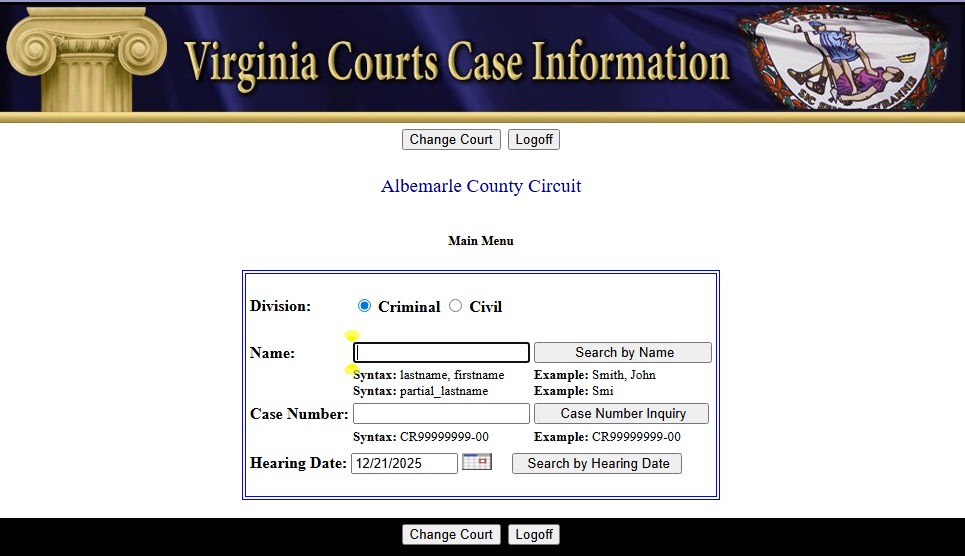
Open the System
- Go to the official link above.
- You will see a dropdown menu labeled with a list of Virginia circuit courts.
Select the Court
- From the dropdown, choose “Loudoun Circuit Court”.
- Click the Begin button to proceed.
Choose Your Search Method
The system allows searching using three main options:
- Case Number – Use this if you have the exact case number.
- Party Name – Enter the full first and last name of the person or organization involved in the case.
- Hearing Date – Use this to find all scheduled hearings for a particular date.
Enter Search Information
- Fill in the fields for your chosen search method.
- Click Search or the equivalent button on the page.
Review the Results
- A list of matching cases will appear.
- Click on a case link to see detailed docket information, including:
- Scheduled hearing dates
- Parties involved
- Case status
- Attorney information
Print or Save Records
- The system allows printing or saving case details.
- Click Print on your browser or use the page’s print/export option to create a PDF copy.
Log Off
- Once finished, click the Logoff button on each page to end your session.
- Do not use the browser back button; this can disrupt the system.
- Avoid bookmarking specific result pages, as sessions are temporary.
What is Loudoun County Court Dockets
Loudoun County Court Dockets are official lists of cases scheduled for hearing or trial in the county’s courts. They provide essential docket information that helps attorneys, litigants, and the public stay informed about upcoming court sessions and past case activity.
Definition and Purpose of Court Dockets
A court docket serves as a record of scheduled cases and legal proceedings in a specific court. It includes details such as case numbers, party names, hearing dates, and the type of proceeding. Maintaining accurate dockets ensures transparency and allows legal professionals and the public to track the progress of cases efficiently.
Different Types of Dockets
Loudoun County courts maintain multiple docket types depending on the case category:
- Civil Dockets: Include lawsuits between private parties, such as property disputes, contracts, and personal injury cases.
- Criminal Dockets: List cases where the state prosecutes individuals for alleged violations of law, including felonies and misdemeanors.
- Family Dockets: Cover matters such as divorce, child custody, support, and adoption proceedings.
- Traffic Dockets: Include cases involving moving violations, license infractions, and other traffic-related matters.
- Probate Dockets: List hearings concerning wills, estates, and guardianships.
How Dockets Are Updated and Published
Court dockets are updated regularly to reflect new filings, scheduled hearings, continuances, and completed cases. The Loudoun County clerk ensures that hearing sc hedules are accurate and posted promptly, often online, for public access. Updates are typically made daily or weekly depending on the court’s caseload.
Publishing dockets online allows users to perform case searches and review upcoming court sessions without visiting the courthouse. The availability of digital docket information supports both convenience and accountability.
Importance of Accurate Docket Information
Accurate docket information is critical for several reasons:
- Legal Professionals: Lawyers rely on up-to-date schedules to prepare for hearings, manage case calendars, and coordinate with clients.
- Public Access: Citizens can check the status of cases, plan attendance at hearings, or follow developments in matters of personal or professional interest.
- Court Efficiency: Well-maintained dockets prevent scheduling conflicts and ensure orderly proceedings.
Loudoun County Court Calendar & Schedules
The Loudoun County court calendar shows planned court activity, including hearing dates and daily court schedules. It helps the public and legal professionals track upcoming hearings and prepare for court sessions with clarity.The calendar acts as a planning tool that organizes cases by date, court, and case type. With clear listings, users can follow the court timetable and locate the right session without confusion.
How to Interpret the Loudoun County Court Calendar
The court calendar presents cases in a structured format that reflects the daily workflow of the court. Each entry includes key details that explain what will take place during a session.
A typical calendar entry includes:
- Case number for reference
- Party names involved in the matter
- Hearing date and time
- Courtroom or judge assignment
- Type of hearing scheduled
Steps to Check Upcoming Hearings or Docket Updates
Finding upcoming hearings requires a few clear steps using official court tools or published schedules:
- Visit the official Loudoun County or Virginia court case search page.
- Select the correct court and case type.
- Enter a case number or party name for a case schedule lookup.
- Review the calendar view or docket listing for upcoming dates.
- Check back regularly for updates, since schedules can change.
Online Access vs. In-Person Schedules
Online calendars provide fast access to court schedules and reduce the need for courthouse visits. Digital listings allow filtering by date or case type and support quick searches.
In-person schedules remain available at courthouse bulletin boards or clerk offices. These postings serve visitors who prefer printed listings or need same-day confirmation. Both formats reflect the same official information, though online updates may appear sooner.
Types of Hearings in Loudoun County Courts
Hearing dates in Loudoun County courts reflect the court’s official docket schedule and show when specific legal matters will be reviewed. Each hearing type serves a distinct purpose and follows a structured placement on the court calendar.Court hearings help judges manage cases in stages, from early appearances to final decisions. Knowing the hearing type helps parties prepare and arrive with the right documents and expectations.
Common Types of Court Hearings
Loudoun County courts handle several hearing categories across criminal, civil, and family matters. Each type appears differently on the docket schedule based on time needs and case volume.
Motion hearings: focus on requests made before or during a case. These may involve evidence disputes, scheduling requests, or procedural rulings. Motion hearings are often short and grouped together on a single court day.
Trial hearings: involve testimony, evidence review, and legal arguments. These hearings take longer and appear on the calendar with extended time blocks. Some trials last one day, while others span multiple sessions.
Civil court hearings: address disputes such as contracts, property issues, or personal injury claims. These hearings may include settlement conferences, motions, or full trials depending on case progress.
Family court hearings: cover divorce, custody, visitation, child support, and protective matters. Family court often uses separate calendars, which helps reduce overlap with criminal and civil sessions.
Sentencing hearings: take place after a plea or verdict. Judges review recommendations and issue penalties during these sessions.
How Hearing Dates Are Assigned and Updated
Hearing dates are set by the court after a case is filed or reaches a specific stage. Judges, clerks, and scheduling staff assign dates based on court availability, case priority, and legal deadlines. The docket schedule may change due to continuances, filings, or court workload. Updates are posted through official court systems and reflected in public records, often on the same day a change occurs. Some updates appear early in the morning before court begins. Parties involved in a case receive notice of date changes through court filings or attorney communication, while public viewers should check the docket and related public records regularly to stay current.
Attending Hearings and Checking Schedule Changes
Preparing for a court appearance starts with reviewing the most recent docket listing. Users should confirm hearing dates within 24 hours of attendance.
Helpful tips include:
- Arrive at least 30 minutes early for security and check-in
- Bring copies of case documents and identification
- Dress appropriately for a courtroom setting
- Check the docket again on the morning of the hearing
Location & Contact Information
The Loudoun County Court location is based in Leesburg, Virginia, and serves as the primary courthouse for major county court proceedings. Visitors can reach the courthouse easily by car or public transit and contact court offices directly for case-related questions.Knowing the correct court address, office hours, and department contacts helps visitors plan an efficient in-person court visit and avoid delays.
Physical Address of the Loudoun County Courthouse
The main courthouse for Loudoun County is located at:
Loudoun County Courthouse
18 E. Market Street
Leesburg, VA 20176
This courthouse hosts Circuit Court operations and related clerk offices. Clear signage around the building helps visitors locate entrances and security checkpoints.
Directions, Parking, and Public Transit
The courthouse sits in downtown Leesburg near Market Street and King Street. Drivers can reach the location from Route 7 or Route 15 within minutes.
Parking options include:
- Public parking garages near Market Street
- Street parking with posted time limits
- County parking lots within walking distance
Courthouse Contact Numbers and Offices
Visitors may contact court departments directly for accurate information. Commonly used contacts include:
- Clerk of the Circuit Court: 703-777-0270
- Case Information Desk: Available through the Clerk’s Office during business hours
- Public Records Requests: Managed by the Clerk of Court staff
Hours of Operation and In-Person Visit Information
The Loudoun County courthouse typically operates during standard business hours:
- Monday through Friday: 8:30 a.m. to 4:30 p.m.
- Closed on state-recognized holidays
For an efficient in-person court visit:
- Arrive early for security screening
- Bring valid photo identification
- Carry paper copies of filings or notices
- Check courtroom assignments upon entry
Frequently Asked Questions
The Loudoun County court calendar and related docket information help the public track court activity and scheduled hearings. These frequently asked questions address common concerns about public access, missed hearings, and record availability.Court dockets serve as a key source of scheduling details and case progress. Clear answers help users rely on official listings with confidence.
Are Loudoun County Court Dockets Public?
Most Loudoun County court dockets are open for public viewing. Public docket listings typically include basic case details such as case number, party names, hearing dates, and court assignment. This level of transparency supports public awareness and trust in court operations. Some records may not appear in public listings. Cases involving juveniles, sealed matters, or protected information may have limited visibility. In these situations, public records access follows state law and court policy, which may restrict details shown online.
What Happens If a Hearing Is Missed?
Missing a scheduled hearing can lead to serious consequences. The court may issue a new order, impose fines, or reschedule the matter at the judge’s discretion. In some cases, a missed hearing may result in a bench warrant or dismissal, depending on the type of case. Anyone who misses a hearing should review the docket information as soon as possible. Contacting the Clerk of Court or legal counsel can help clarify next steps and determine whether a request to reschedule docket activity is available.
How Long Does It Take for Cases to Appear in the Docket?
New cases usually appear in the Loudoun County court calendar within a short period after filing. Many docket systems update daily, though timing may vary based on case type and court workload. Hearing dates may appear once the court assigns a session. Changes such as continuances or added hearings are reflected during regular updates, so checking the docket frequently helps users stay current.
Can Docket Dates Change After Posting?
Yes, docket listings may change. Courts may adjust schedules due to filings, judge availability, or case developments. These changes often appear online before the hearing date, though same-day updates may occur. Users should review the docket on the day of the hearing to confirm time and courtroom details. This practice reduces the risk of missing updated information.
Is Historical Docket Information Available?
Access to older docket records depends on the court system and case type. Many online systems allow users to view past hearings and completed cases for reference. This supports research and case tracking. Some historical records may require a request through the Clerk’s Office, especially if certified copies or extended case histories are needed. Availability may vary based on record retention rules.